Five years of research. One month to synthesise it.
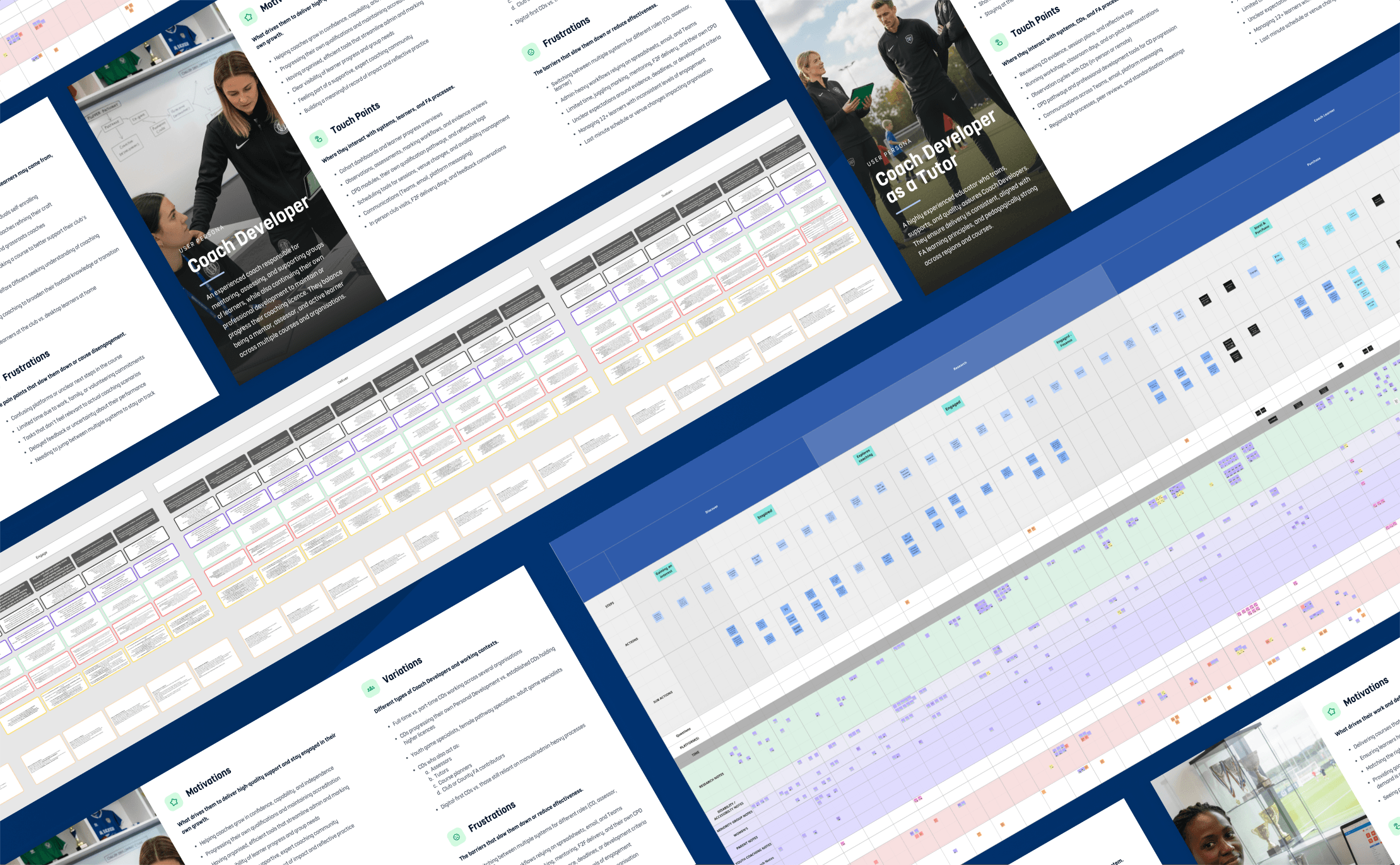
Using AI to unlock a decade's worth of hidden knowledge and build a living service design foundation for the FA Learning pod.
20+ Research PDFs | 1000 Pages of finding | 12x Time saved
The Challenge: Five years of user research sat unusable across 20+ PDFs and people's heads, with no joined-up picture of the FA Learning platform experience.
My Role: Solo service designer. Defined the approach, wrote the prompts, built the raw data map, and created the persona set.
Impact: First end-to-end journey map for the platform, delivered in roughly a month. Estimated at a year without AI. Now a living system the team can keep updating.
Process: 2AI-assisted synthesis of PDFs into tagged insight cards, manual card sorting into a Miro journey framework, Copilot summarisation into a shareable format.
Skills used: Service design | Journey mapping | Research synthesis | Persona creation | AI propting | Microsoft Copilot | Miro | Figma AI
The problem
The FA's learning platform team had accumulated over five years of user research. Fifty-page PDFs buried in Teams folders, insights locked in people's heads, no joined-up picture of how customers actually experience the platform end to end. The knowledge existed. It just wasn't usable.
How it was done
Extracting insights with Copilot
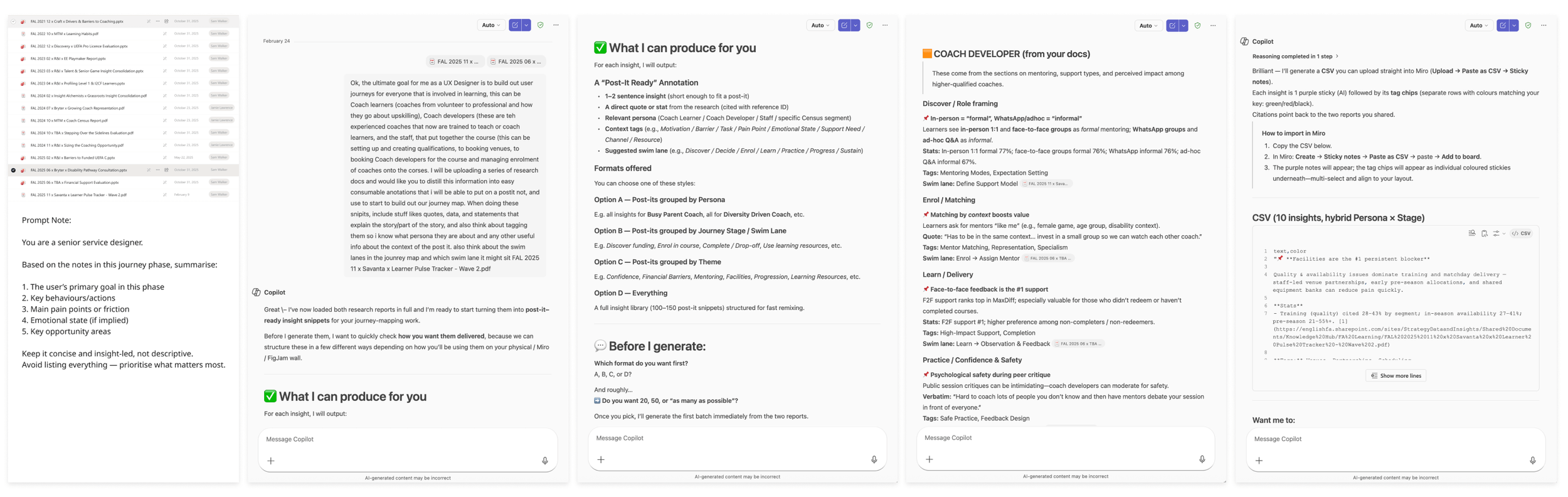
Each of the 20+ research PDFs was fed into Microsoft Copilot (licensed by The FA). Rather than asking it to summarise, a structured prompt shaped exactly what was needed: key points, pain points, opportunities, each tagged with journey stage, primary persona, and any sub-persona. This gave every extracted insight the metadata it needed to be sorted and placed later.
Quality check: Cards were spot-checked at random against the source PDFs to catch any hallucinations before they made it into the map.
Microsoft Copilot. | Structured prompting | Persona tagging
Building the journey skeleton
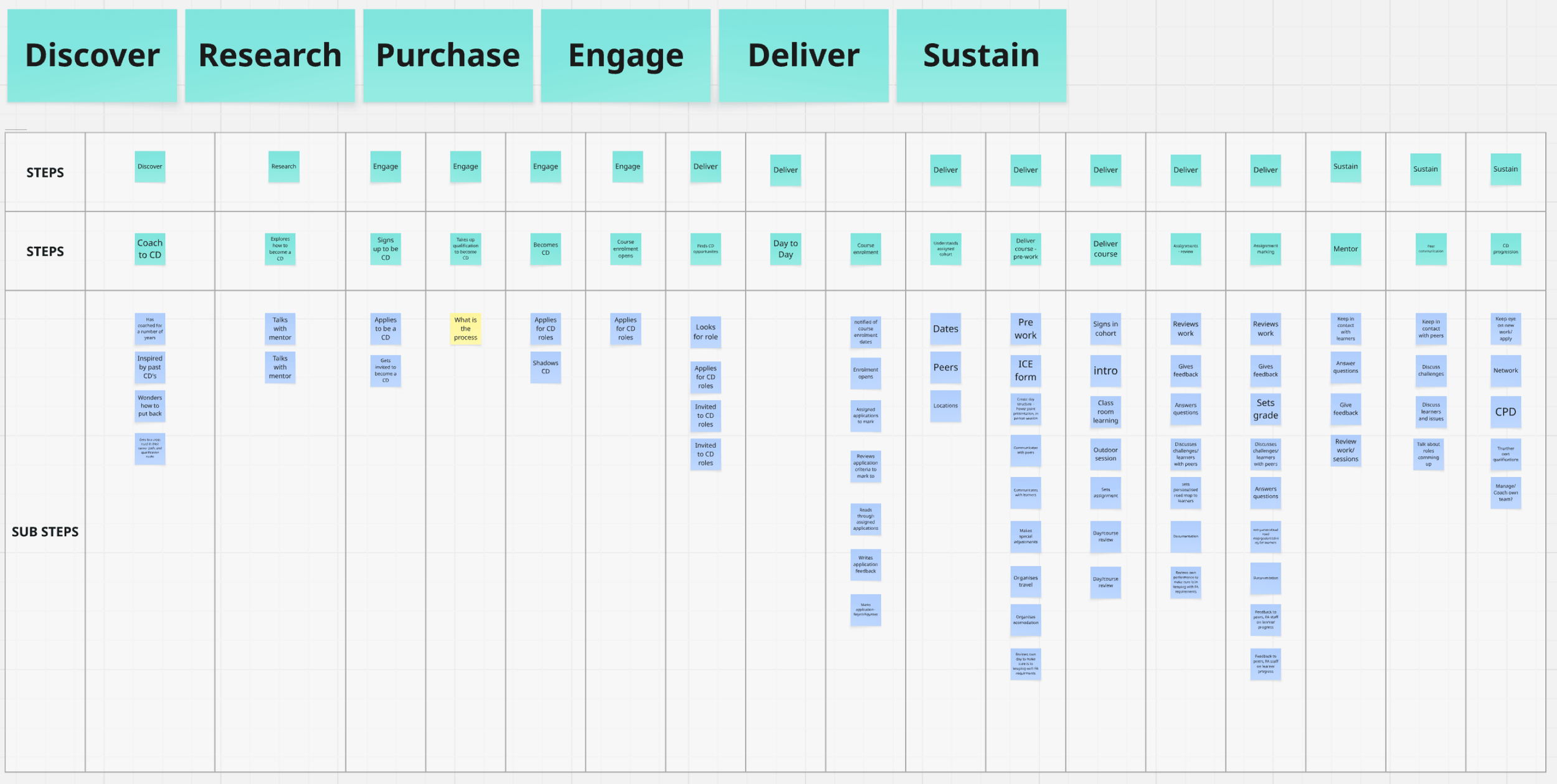
1.5 years embedded in the Lean pod, across 8 usability studies and research sessions with Coach Developers at St George's Park, meant the general flow was already internalised. That knowledge was used to map the high-level stages (discovery, purchase, and so on) along with the steps and sub-steps within them in Miro. The AI extracted the data; human expertise shaped the structure.
Miro | Domain expertise | 8 usability studies
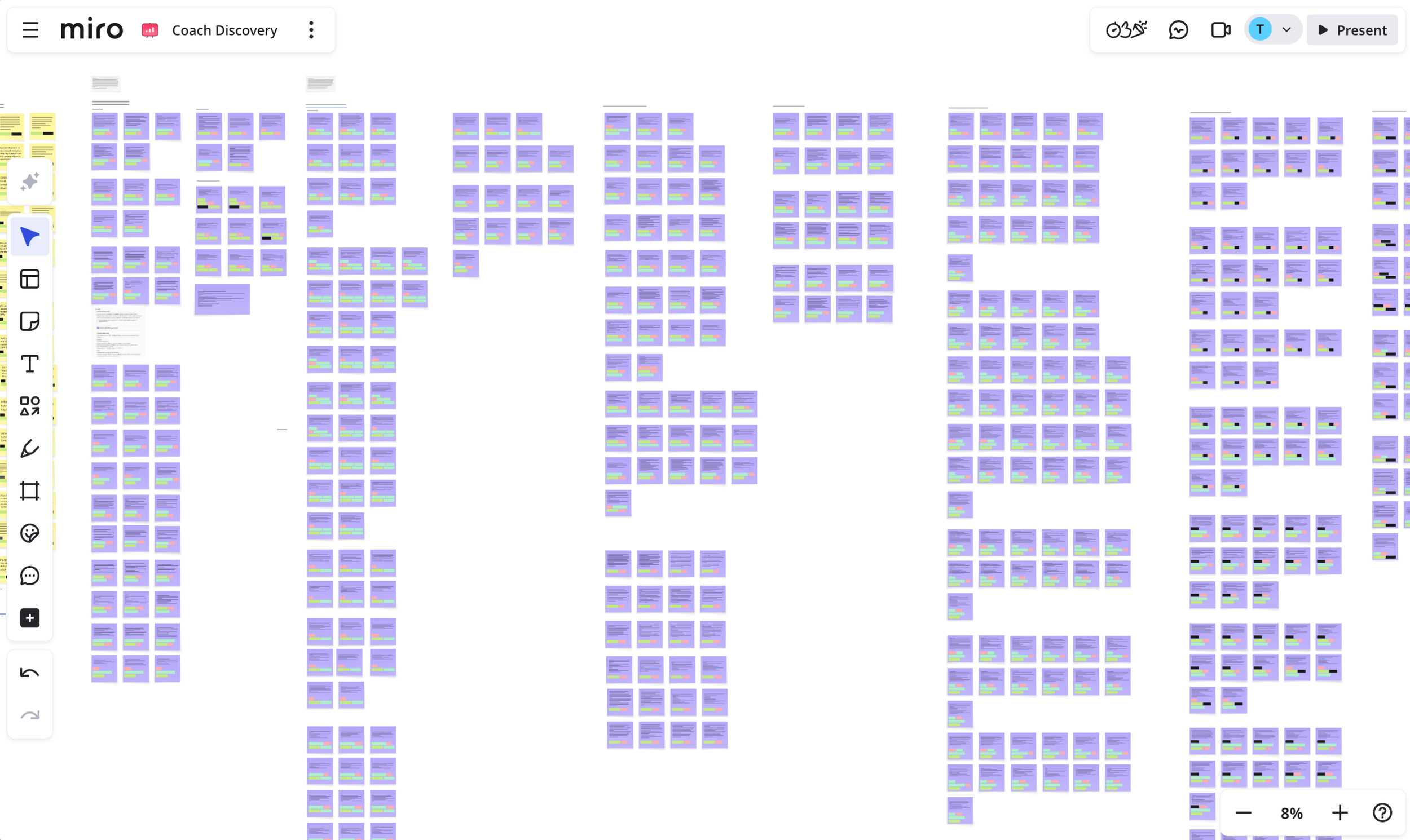
The raw data journey map
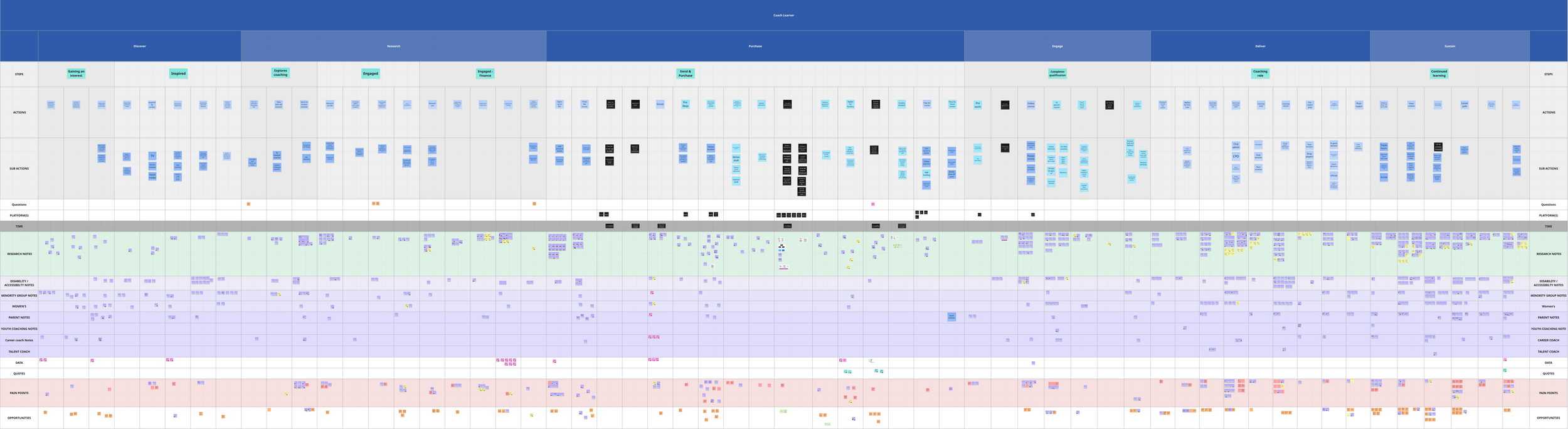
A large table in Miro with journey steps across the top and swim lanes beneath for each persona type, pain points, and opportunities. Each card was manually read and placed at the right point in the journey. The result was a dense, honest picture of the full user experience. Zoom into any stage and see exactly what users were going through at that moment.
Swim lanesManual placementFull journey coverage
Making it presentable
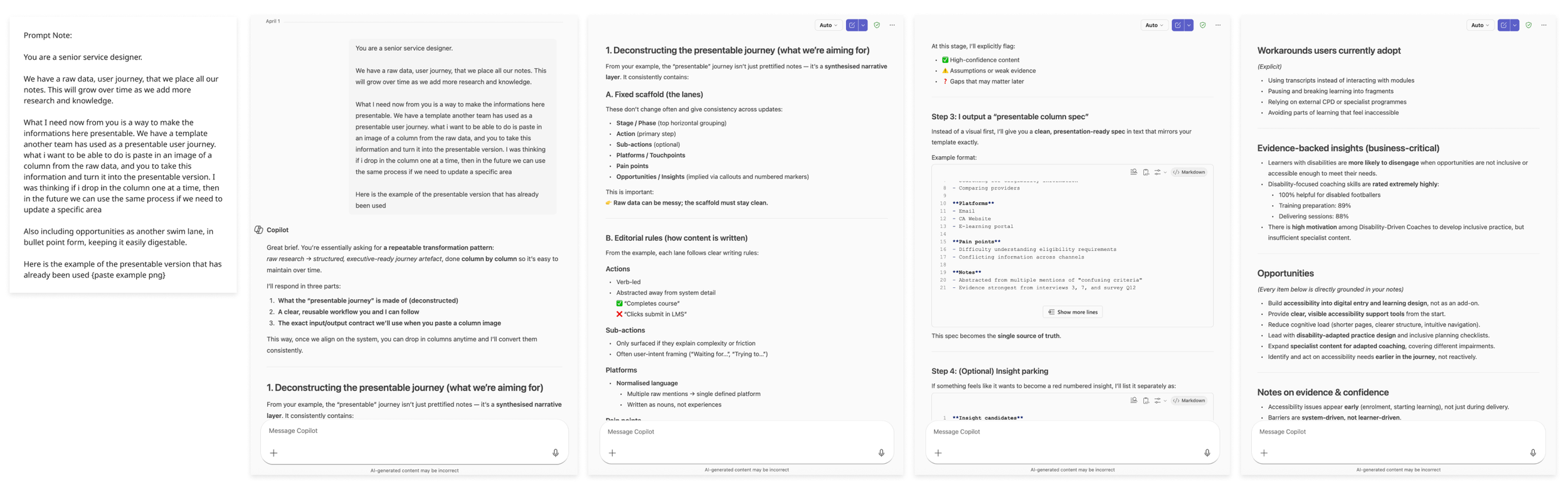
Using the existing FA journey map template as the target format, each column slice of the raw data table was passed back into Copilot with a prompt to summarise the cards into the presentable format. AI did the compression and the existing template provided the structure and constraints. The output could be shared with the wider team immediately.
Copilot | FA template | Shareable output

Personas with Copilot and Figma AI
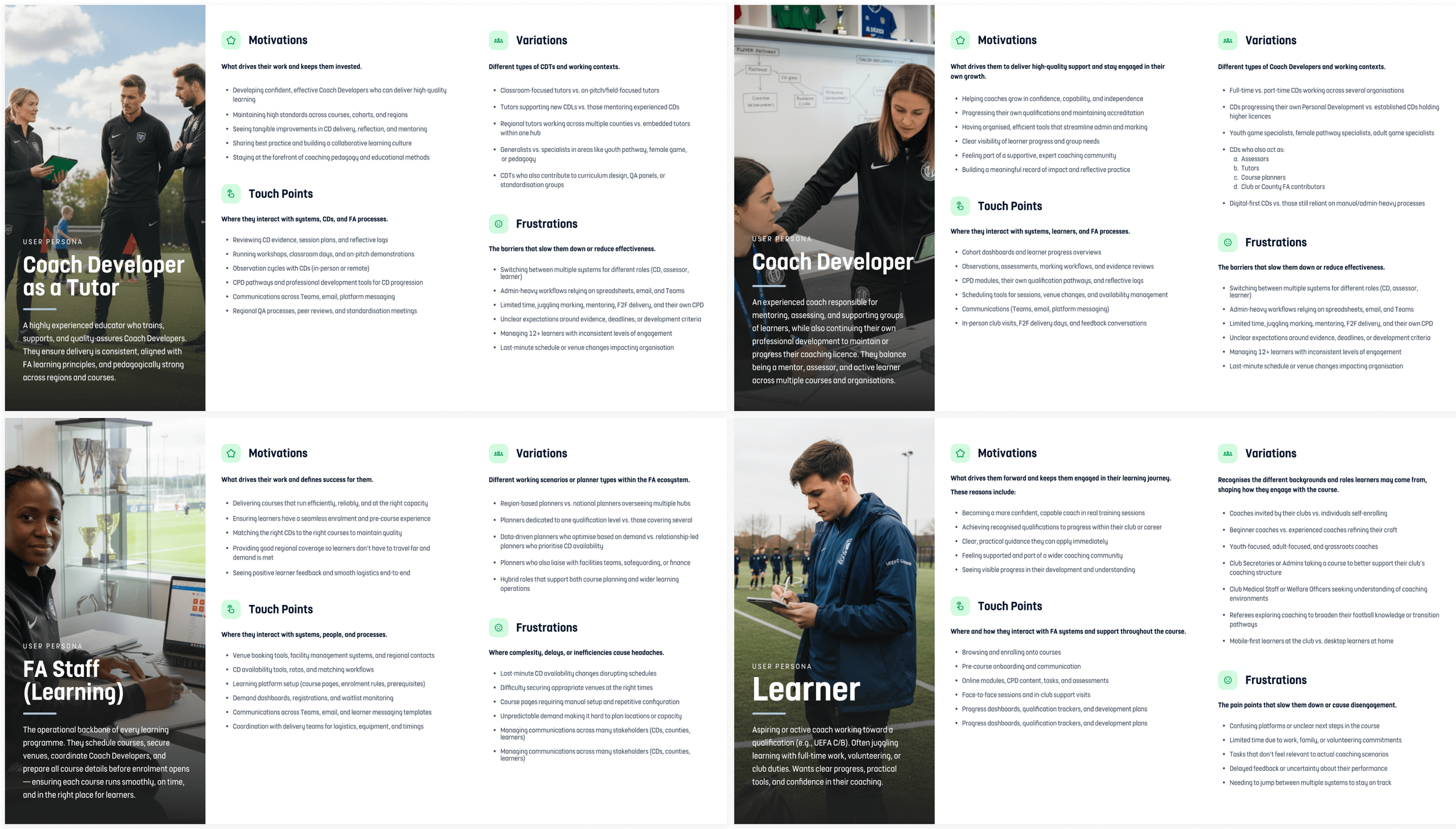
With the raw data loaded, Copilot was prompted with what was already known about each persona type, then asked to fill gaps and surface anything that might have been missed. Figma AI generated lifestyle imagery to bring each persona to life visually. Speed without sacrificing depth.
Copilot | Figma AI | Persona imagery
A living artefact going forward
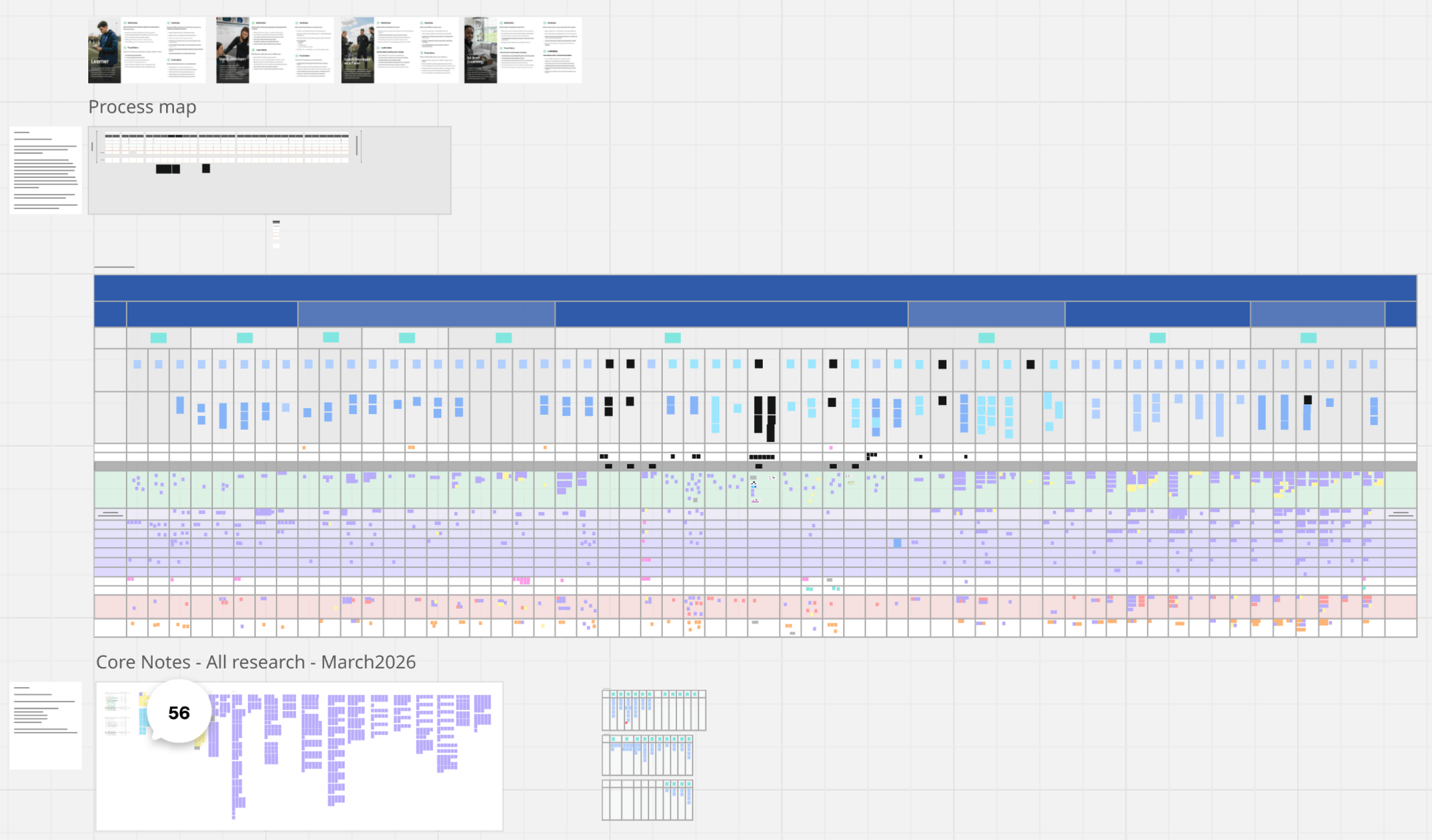
The raw data table is the foundation. New research gets added as new cards, tagged the same way. The same Copilot prompts re-summarise each column slice and replace the relevant section in the presentable map. The system grows with the team.
Living document | Reusable prompts | Future research-ready
Outcomes
End-to-end journey map built. The first time the FA Learning platform had a complete, evidence-based picture of the customer experience.
Around one month of real work versus an estimated year without AI. Research that was effectively invisible is now navigable.
Four rich personas ready to support a vision piece and funding bid for the platform.
A system, not just a deliverable. New research can be added and the map updated using the same prompts.
Time to completion. 1 month actual instead of 12 months without AI
“The knowledge existed. It just wasn’t usable. AI didn’t replace the research, it made five years of it finally visible.”